

Operation KALARI
Reviving public grounds, courts, pools, hostels and stadiums across Kerala.
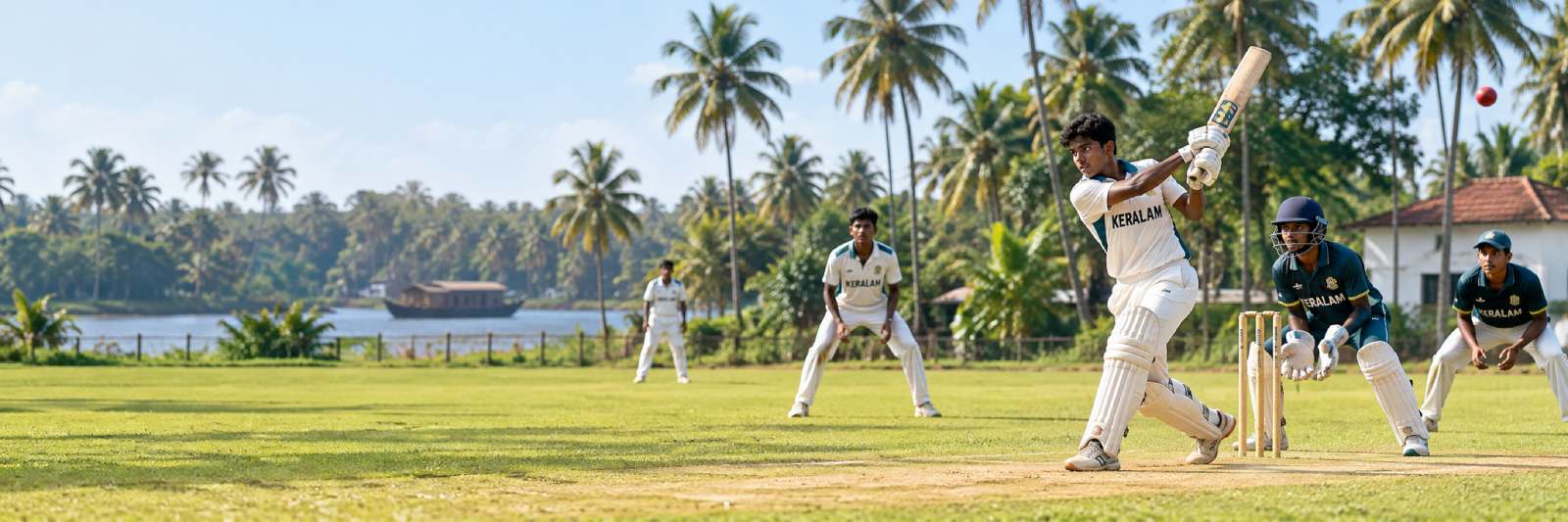
Kerala Sports Partnership Platform
Every sports need in Kerala, listed with its cost. Anyone willing to help can pick one — and follow every rupee until it reaches the ground or the athlete it was meant for.
Why KALARI exists
Over many years Kerala has built stadiums, courts, playgrounds, swimming pools, hostels and gymnasiums. Much of it now needs repair. At the same time, Kerala’s athletes need equipment, coaching, travel and treatment that the budget does not fully cover.
Many companies want to help — through their CSR (Corporate Social Responsibility) budgets, through sponsorship, or by giving goods and services. But a company had no way of knowing which ground needed what, whom to contact, what it would cost, or how it would later show its board that the money was well spent.
KALARI brings both sides together in one public place.


Tracked end to end — from the first rupee to the child, athlete or ground it was meant for.
A public website where every sports need in Kerala is listed with its cost, where anyone willing to help can pick one and commit to it in a few minutes, and where every rupee, every pair of shoes and every repaired toilet is tracked publicly until it reaches the person it was meant for.
What we cover
Whether it is a ground, a player, a team, an event or a long-term programme, every need is listed the same way — with a price, the number of people it helps, and its legal category already attached.
Reviving public grounds, courts, pools, hostels and stadiums across Kerala.

Equipment, coaching, travel and treatment for athletes selected on merit.
Backing the teams that carry Kerala’s name at national competitions.
State and district championships, tournaments and sports days.
Long-term grassroots, school and community programmes.
How KALARI works
Every offer that arrives is asked the same thing. The answer sets the route automatically, and the person offering is told which route they are on — and why — before they submit.
Yes — a commercial right
Naming rights on a stadium or a brand on the Team Kerala jersey are valuable things owned by the public. They cannot be given quietly to one company at a price nobody else was allowed to match — so they are offered openly, against a published minimum value, for a fixed term.
No — support without a commercial return
CSR contributions, donations, and gifts of goods or services are onboarded directly. Under the CSR rules, money spent to gain marketing benefit does not count as CSR — keeping the two routes apart protects the company as much as it protects the State.
Route 2 is not anonymous. Contributors are thanked publicly, named in Government publications and given a certificate. What Route 2 does not give is a purchased benefit — a brand on a jersey, or a ground carrying a company’s name. Being thanked is not advertising. Companies wanting both can do both, on two separate agreements.

Operation KALARI
Operation KALARI revives Kerala’s public sports facilities with the help of sponsors. A sponsor pays for repairs, or carries them out under supervision. It never owns, leases, occupies or controls anything — and it can never stop an athlete, a student or a citizen from walking in.
Sanctioned by the Government of Kerala
G.O.(Rt) No.115/2026/S&YA dated 23.07.2026
Listed
The need is verified, priced item by item and published with a named officer.
Sponsored
One or several sponsors commit to the whole ground or to single items.
Sanctioned
Engineering sanction comes before any work begins.
Built
Work goes ahead under supervision, with progress and photos posted publicly.
Reopened
Only after completion, fitness and safety certificates are all in place.
Ways to give
They differ in who holds the money and who does the work. All five are permitted — and all five are tracked in public.
Funds go to a separate account tagged to that ground. The work is done by the Department under normal government rules.
The sponsor pays its own contractor directly — but only after engineering sanction, under Government supervision, with inspections.
Received lawfully as CSR, with the purpose, beneficiaries and legal category recorded for the company’s board and auditors.
A ground’s repairs are split into priced items. Each sponsor’s share is recorded separately — nobody’s contribution disappears into a pool.
A sponsor pays for cleaning, painting and servicing for three to five years, checked every quarter.
Most grounds don’t need one large sponsor — they need four small ones. Because every repair list is split into separately priced items, a local trader, an alumni association and a large company can all work on the same ground without anyone being crowded out.
Example — one ground, ₹50 lakh
For CSR teams
A company does not give to “sports” in the abstract. It gives to a named requirement with a price, a beneficiary count and its Schedule VII category already attached — so a compliance team can approve it without a separate legal opinion, and show its board exactly where the money went.
Sports work legitimately touches:
One company can spread its budget across many needs, and many companies can reach the same need — each share recorded separately, each with its own report.
Beyond money
 Goods
Goods
Accepted only against a real, published need — if nobody needs 400 pairs of shoes, the offer is declined, however generous. Goods are inspected on arrival, substandard items are returned, and every pair is tracked to the athlete who receives it.
 Services
A hospital, airline or coach commits a value of service — so many physiotherapy visits or tickets. Reminders go out before it expires, so unused generosity is reallocated instead of quietly lapsing.
 Athletes
Each athlete in an approved pool has one page showing what a year of their development costs, what Government already provides, and what is still missing. The missing figure is the one offered to supporters.
Not negotiable
These are not guidelines on a page. The platform is built so that they hold — in every page, report and download.
An athlete is selected on merit first and supported afterwards — never the reverse. No sponsor sees, influences or is consulted on selection.
An athlete under 18 appears by initials and discipline only — no photograph, school, address or contact details, anywhere.
No sponsor can stop an athlete, student or citizen from using a public facility. Complaints about access are escalated immediately.
When a sponsor carries out work itself, it cannot begin until engineering sanction is in place, under Government supervision.
Completion, fitness and safety certificates are all required before anyone is let back in. None can stand in for another.
Recognition uses approved wording only. Some categories of business cannot be associated with any facility or programme.
Transparency
For every ground on KALARI, ten facts are public and stay public. The last two make the rest real: a named officer means a complaint has somewhere to land.
Seen a problem?
Anyone — an athlete, a coach, a parent or a passer-by — can report that a ground is locked, that branding has gone too far, or that the work is poor. You can report anonymously.
Report a ConcernThe State’s annual recognition for contributors to sport in Kerala. It is earned, never purchased — every contributor is eligible, and it is awarded against published criteria.
The whole system, in six lines
Every need is listed with a price.
Anyone can pick one.
If they want advertising in return, they bid for it against a published minimum.
If they don’t, they are welcomed the same week.
The money, the goods and the work are tracked to the child, the athlete or the ground they were meant for.
And every step is visible to the public, with a name attached.
Who runs KALARI
Sports & Youth Affairs Department
Government of Kerala — leads the scheme and the platform.
Sports Kerala Foundation
Receives contributions, including CSR, and keeps each sponsor’s share on record.
Sports Councils
The Kerala State Sports Council and the District Sports Councils, which hold and look after many of the facilities listed.

Back a ground, an athlete or a programme — or list a need of your own.